The Top End's reputation comes from the wet season. The AFL season is the dry: mornings in the low twenties, nights under twenty, and ten hours of sunshine a day.
What July feels like
Across a July day and night, Darwin averages 25°C. Mornings sit around 23°C at 9am, the afternoon peaks near 30°C, and overnight it drops to 19°C. June is almost identical, August a degree warmer. That is the season a Territory club would play in.
The AFL opens every season in the heat. A March afternoon at the Gabba averages 29°C, with 20°C nights; the Gold Coast 27.5°C and 20°C; Perth 30°C. A July afternoon in Darwin averages 30.7°C, with a 19°C night, cooler after dark than Brisbane or the Gold Coast in March. The difference is the rain: Brisbane gets ten wet days in March and the Gold Coast thirteen. Darwin in July gets one day in five years' worth.
Darwin has two seasons, and the football one is the good one. From May to September the wet is gone: June averages 1.7mm of rain, July 1.1mm, August 4.5mm. The median July rainfall is zero: in half of all Julys on record, not a drop. Across April to September, Darwin averages 11 days of rain. Melbourne gets 51 over the same months, Adelaide 58, Hobart 46.
Through the football months Darwin averages 9.8 hours of sunshine daily, peaking at 10.4 in August with nineteen completely clear days in the month. Adelaide in July manages 4.7 hours, Hobart 4.4. Dry grounds, clean ball, no mud. The football people want to watch.
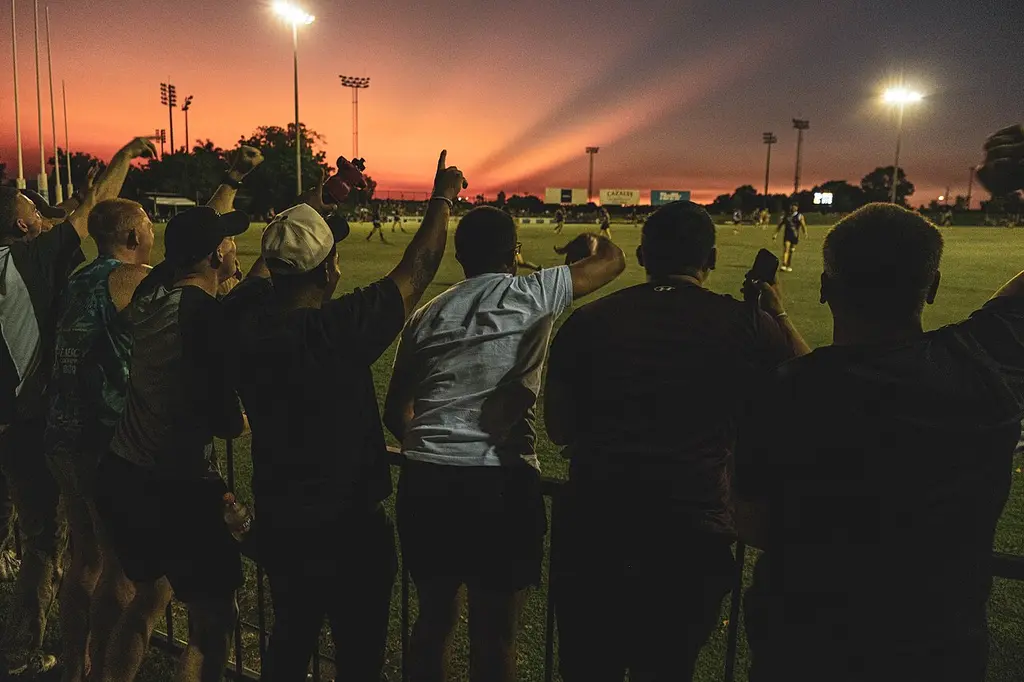
Most AFL matches are played at night, and the Top End's dry-season nights are its best asset. July's overnight low averages 19.3°C and August's 20.3°C, so an evening game is played well below the afternoon peak, with no rain and no wind chill. Better than a July night in any southern capital, for players and for the people in the stands.
March is the tail of the wet: 310mm across 16 or 17 rainy days, with humidity to match, so an opening round in Darwin isn't the plan. April is the turn, 102mm over seven rainy days, and from May the run is clean through to September. Any sensible fixture puts the majority of the Territory's home games between May and August, which is exactly where the blockbusters already sit.
Wet games rate worse, look worse and play worse. A venue that can all but guarantee a dry, warm, clear evening in the middle of winter is worth something to a broadcaster negotiating the 2032 rights, particularly in a round where every southern ground is cold and grey.
The football months are highlighted. Long-term averages at Darwin Airport: the average across day and night, the temperature at 9am and 3pm, the overnight low, daily sunshine, and days with 1mm of rain or more.
Month
Average
9am
3pm
Overnight
Sunshine
Wet days
Jan
28.4°
28.0°
30.2°
24.9°
5.7 hrs
19.0
Feb
28.1°
27.7°
30.0°
24.8°
5.9 hrs
17.8
Mar
28.3°
27.6°
30.5°
24.6°
6.8 hrs
16.6
Aprseason
28.4°
27.4°
31.7°
24.1°
8.8 hrs
7.3
Mayseason
27.1°
25.6°
31.2°
22.2°
9.6 hrs
1.6
Junseason
25.4°
23.3°
29.9°
20.0°
9.9 hrs
0.3
Julseason
25.0°
22.8°
29.6°
19.3°
10.2 hrs
0.2
Augseason
25.9°
24.4°
30.2°
20.3°
10.4 hrs
0.3
Sepseason
27.9°
27.0°
31.2°
23.0°
9.9 hrs
1.6
Oct
29.2°
28.7°
32.0°
25.0°
9.5 hrs
5.1
Nov
29.4°
29.2°
31.9°
25.4°
8.4 hrs
10.1
Dec
29.1°
28.8°
31.2°
25.4°
6.9 hrs
14.2
DARWIN'S JULY, THE AFL'S MARCH
The season opens every year in Brisbane, the Gold Coast and Perth heat. Darwin in the middle of winter is the same football weather — without the rain.
Darwin in July
Daytime high
30.7°
Overnight low
19.3°
Wet days
0.2
Perth in March
Daytime high
29.8°
Overnight low
16.0°
Wet days
2.3
Brisbane in March
Daytime high
29.2°
Overnight low
20.3°
Wet days
10.0
Gold Coast in March
Daytime high
27.5°
Overnight low
19.9°
Wet days
13.4
WET DAYS, APRIL TO SEPTEMBER
Total days of rain across the home-and-away season, by city.
Darwin
11.3 days
Brisbane
30.9 days
Gold Coast
45.1 days
Hobart
45.8 days
Sydney
47.9 days
Melbourne
51 days
Adelaide
58 days
Perth
66.6 days
Source: Bureau of Meteorology long-term averages. Darwin Airport, Melbourne Olympic Park, Adelaide (Kent Town), Sydney (Observatory Hill), Brisbane, Gold Coast Seaway, Perth Airport and Hobart. The day-and-night average is the midpoint of the average high and overnight low.
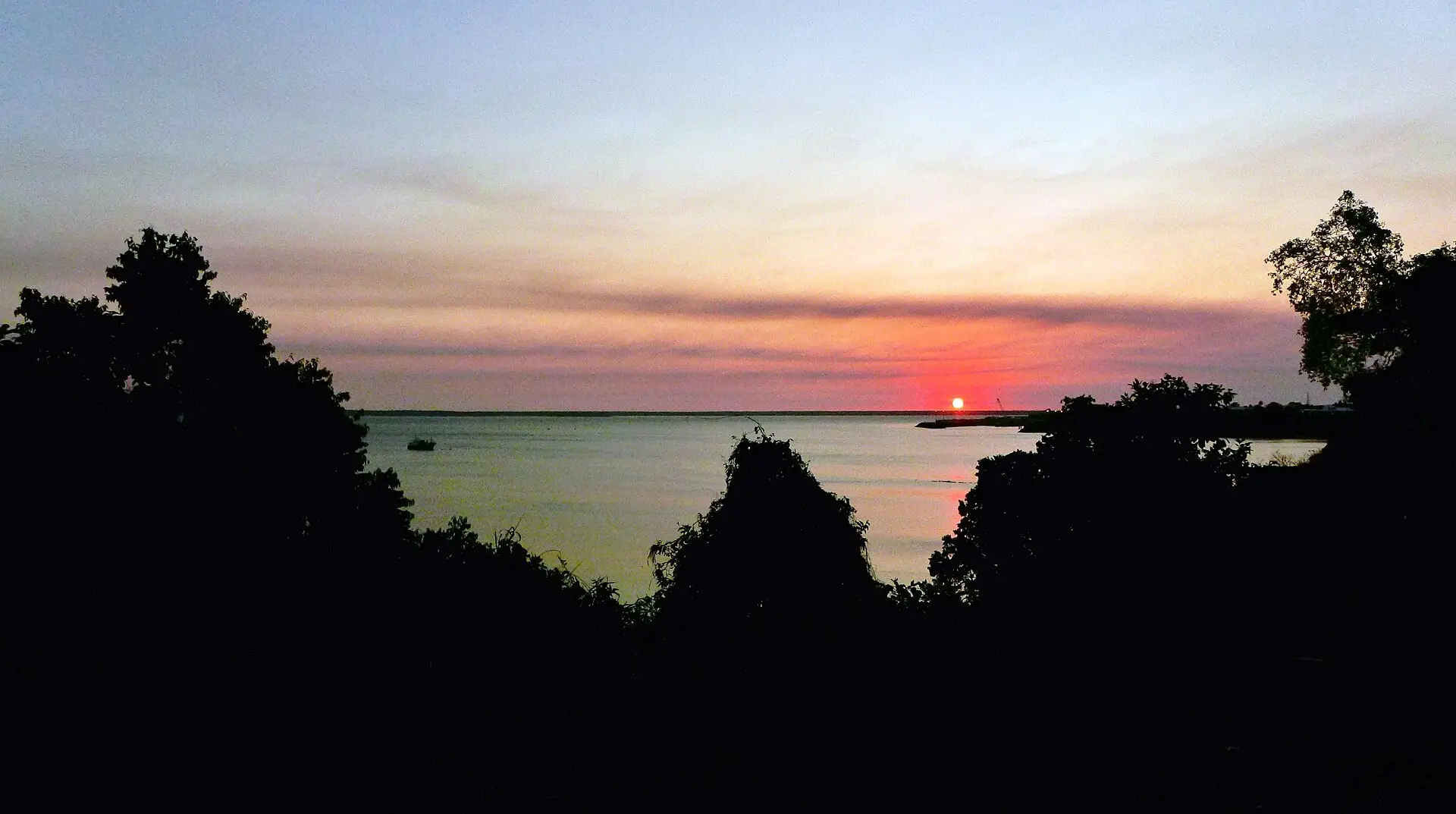
Photo: Bahnfrend, sunset over Darwin Harbour, August 2023 (CC BY-SA 4.0) · source